Miso Matcha
Umami in ice cream (trust us)
You're sifting matcha and whisking it in a specific W or M pattern (not circular, or you'll trap clumps), dissolving miso in warm cream without making paste-balls, and timing when to add what to hot custard. The techniques are straightforward but demand precision—skip the sifting or rush the whisking and you'll have gritty green bits forever. Follow the steps exactly and you're fine. Wing it and you'll fuck it up, pal.
Yes, there’s miso in this. Yes, miso is salty and savory and usually goes in soup. And yes, it fucking works in ice cream—specifically with matcha. I know you’re skeptical. I would be too. But the white miso adds this subtle depth that amplifies the matcha’s vegetal notes while adding a whisper of umami that makes the whole thing more interesting rather than weird. It’s not “sweet meets savory” in an obvious way—it’s more like the miso turns up the volume on everything else, making the matcha taste more like itself.
The toasted rice crispies echo genmaicha—Japanese green tea with toasted rice—which is a classic pairing that’s been around for centuries. So while this combination sounds modern and experimental, you’re actually tapping into a traditional Japanese flavor profile. You’re just doing it in frozen form, which is where it gets interesting.
You’ll probably make a face when you first read this ingredient list. That’s normal, pal. Everyone does. Then they taste it and get quiet for a second while they process what just happened. Then they ask for more. It’s a whole journey.
Ingredients
Base:
- 2 cups heavy cream (small amount for miso, rest for custard)
- 1 cup whole milk (1/4 cup for matcha, rest for custard)
- 1/2 cup sugar
- 4 egg yolks
- 2.5 tbsp high-quality culinary or ceremonial matcha powder
- 2.5 tbsp white miso paste (shiro miso)
- Pinch of salt
Toasted Rice Crispies:
- 1 cup crispy rice cereal (like Rice Krispies)
- 1 tbsp butter
- 1 tbsp sugar
- Tiny pinch of salt
Instructions
Toasted Rice Crispies (make this first—it needs to cool):
Melt butter in a large skillet over medium heat. Add the rice cereal and toast it while stirring constantly for 3-4 minutes until it’s golden and smells nutty as hell. You’ll notice the cereal darkening slightly and the aroma shifting from bland cereal to toasted, almost popcorn-like. That’s what you want.
The toasting process is doing a few things: driving off moisture (making them crunchier), triggering Maillard reactions (creating nutty, toasted flavors), and basically transforming boring puffed rice into something that tastes intentional. This is the same principle behind genmaicha—toasted rice adds this warm, nutty quality that complements green tea’s vegetal bitterness.
Sprinkle the sugar and salt over the cereal, stir for 1 more minute as the sugar melts and coats everything. The sugar will create a light glaze that helps the pieces stick together slightly and adds a touch of sweetness. Spread it on parchment to cool completely. It’ll crisp up even more as it cools. Store airtight until you’re ready to churn—these will stay crunchy for several days as long as you keep moisture out.
Prepare Matcha (and understand why this step matters):
Here’s the thing about matcha: it’s finely ground tea leaves—so fine that the particles are almost powder-like, around 5-10 microns in diameter. These tiny particles have a naturally hydrophobic (water-repelling) coating from oils in the tea leaves. When you try to mix matcha powder directly into liquid without proper technique, the particles clump together into these stubborn little balls that won’t break down no matter how hard you whisk. You’ll end up with green streaks and gritty bits in your ice cream, which is nobody’s idea of a good time.
The solution is a two-step process: sifting and proper whisking.
Sift the matcha through a fine-mesh sieve into a small bowl. This breaks up any clumps that formed during storage and separates the particles so they’re not already stuck together before you even start whisking. Take your time with this—press gently with a spoon if needed to push it through. You want fine, powdery matcha with no visible clumps.
Heat 1/4 cup milk to 165-175°F—hot enough to help break down the hydrophobic barrier on the matcha particles, but not boiling (boiling would damage the delicate flavor compounds). Pour the hot milk over the sifted matcha.
Now here’s the whisking technique that actually matters: whisk vigorously in a W or M pattern rather than circular. Why this specific pattern? When you whisk in circles, you create a vortex that can actually trap air bubbles and matcha clumps in the center—they spin around with the liquid instead of being broken down. The W or M pattern (also called a zigzag) forces the whisk to move through the liquid in different directions, creating more shear force and turbulence that actually breaks apart the matcha particles and distributes them evenly.
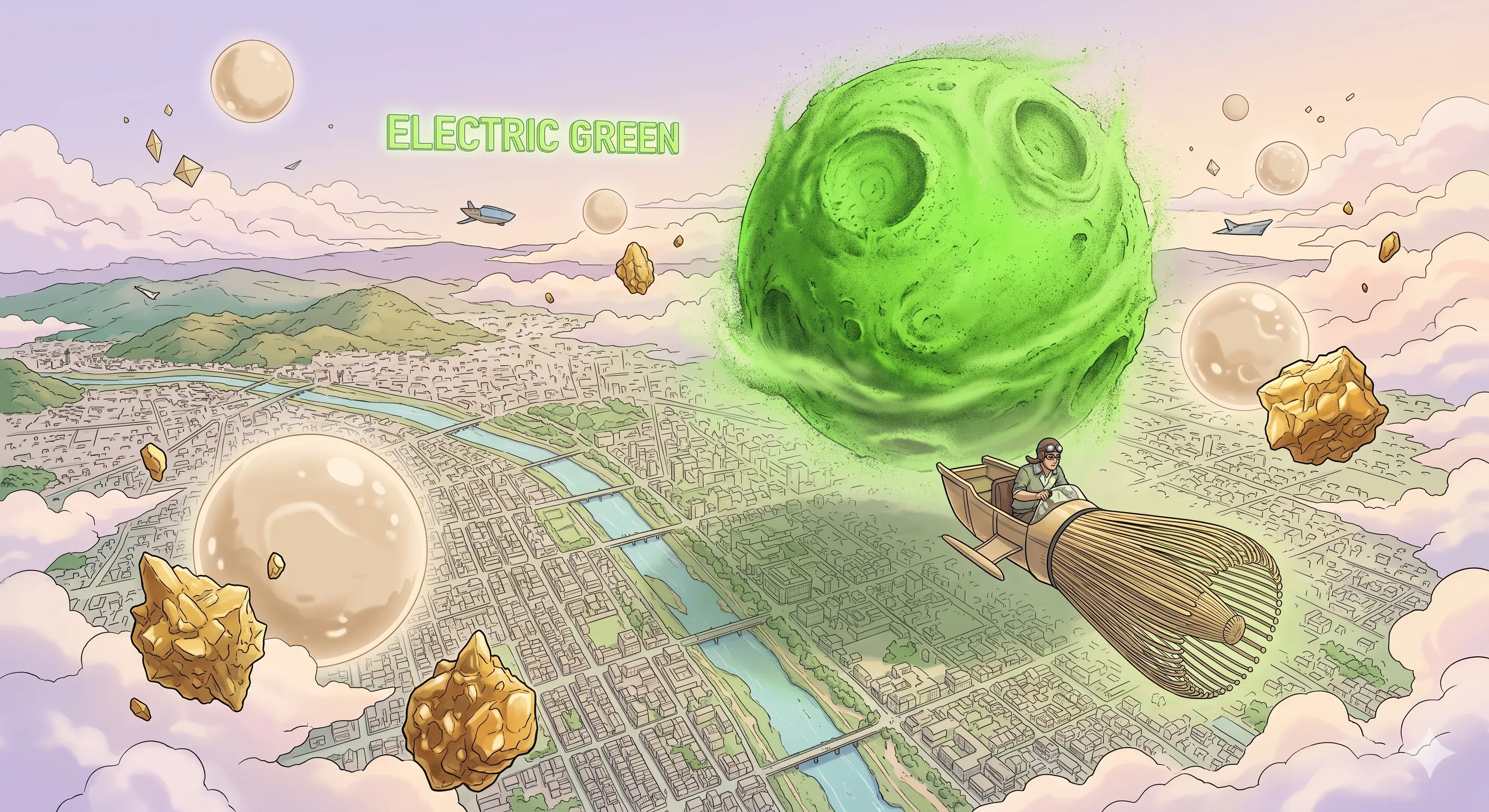
Whisk hard for 30-60 seconds until the mixture is completely smooth and lump-free. It should be this vibrant, almost electric green—bright and uniform with no darker spots or streaks. If you see any clumps, keep whisking. If they’re really stubborn, you can use a tiny whisk or even a small fork to specifically attack those clumps before they get set.
The matcha paste should be thick, smooth, and gorgeously green. Set it aside.
Prepare Miso (why this can’t be skipped):
White miso paste is thick, sticky, and doesn’t want to dissolve in cold liquid. If you try to just dump it into the custard and stir, you’ll get stubborn blobs of miso floating around that never fully incorporate. Then you’ll have bites of ice cream that taste weirdly salty and other bites with no miso at all. Not the vibe.
The solution: warm cream acts as a solvent and helps break down the miso’s thick, paste-like texture into something that can actually mix into the custard.
Warm 1/2 cup cream gently to about 100°F—just barely warm to the touch, like bathwater. You don’t want it hot because high heat can damage the beneficial enzymes and probiotics in miso, even though we’re ultimately going to pasteurize it later. Add the white miso and whisk until it’s completely dissolved and smooth. You should have a pale tan, uniform liquid with no chunks or streaks. If you see any miso clumps, keep whisking. This should take about 30-60 seconds of vigorous whisking.
The miso-cream mixture should look completely homogeneous—smooth, pourable, and one unified color. Set it aside.
Make Custard:
Combine the remaining milk, cream, and sugar in a saucepan. Heat over medium until steaming. Make your standard custard with the 4 egg yolks—temper them with hot cream, return to pan, cook to 170-175°F while stirring constantly. You know this drill by now.
The moment—and I mean the MOMENT—you pull the custard off the heat, immediately whisk in the matcha paste vigorously. You want to do this while the custard is still hot for two reasons. First, the heat helps the matcha incorporate more smoothly into the custard. Second, if you wait until the custard cools, the matcha can settle or separate, and you’ll have a harder time getting it evenly distributed.
The custard should turn this gorgeous pale green—like a green tea latte, but more subtle. Whisk hard for 15-20 seconds until you see uniform color with no streaks or dark spots.
Then whisk in the miso-cream mixture until everything is homogeneous. The miso will lighten the color very slightly—you’ll have this beautiful, soft green custard that smells faintly of matcha with this subtle savory-sweet undertone that’s hard to pinpoint unless you know what you’re looking for.
Add a pinch of salt. This isn’t just for seasoning—it’s enhancing the umami in both the matcha and miso, making them taste more intense and complex.
Strain the custard through a fine-mesh sieve to catch any possible matcha clumps you might have missed or any cooked egg bits. Cool over an ice bath, stirring occasionally.
Taste it when it’s cold. The matcha should be present but not aggressively bitter—not like you’re drinking straight tea powder or eating grass clippings. You should taste clear green tea flavor with this subtle vegetal quality. The miso should add this interesting savory-sweet undertone that’s noticeable but not identifiable unless you’re actively looking for it. It shouldn’t taste “salty” or “like soup.” It should feel unified and complex, not like two separate flavors awkwardly existing in the same space.
If it tastes too bitter (too much matcha) or too grassy, you can balance it slightly by adding another tablespoon of sugar. If it tastes flat or one-dimensional, you might not have used enough miso or matcha—nothing to do about it now, but adjust for next time.
Refrigerate at least 4 hours, preferably overnight. The flavors will meld and develop more complexity with time.
Churn:
Churn until it hits soft-serve consistency. This may take slightly longer than usual because matcha contains natural tannins and compounds that can slightly interfere with the ice cream’s structure, making it freeze a bit more slowly. Just be patient—it’ll get there.
In the last minute of churning, add those cooled toasted rice crispies. You want them mixed in but not pulverized. They should stay relatively whole and crunchy.
Transfer to your container and freeze for at least 4 hours until firm.
Notes
Matcha quality and why it actually matters:
Matcha comes in different grades, and the difference is significant. Ceremonial grade is the highest quality—vibrant green, smooth, almost sweet, with minimal bitterness. Culinary grade is slightly less expensive, a bit more bitter, and works damn well for ice cream where it’s being mixed with other ingredients. What you want to avoid is cheap, brownish-green matcha that tastes like bitter grass and looks dull. That’s old matcha or low-quality matcha, and it’ll make your ice cream taste like disappointment.
Good matcha should be bright, vivid green—almost unnaturally green. It should smell fresh and slightly sweet, not musty or stale. Store opened matcha in an airtight container in the freezer to preserve color and flavor, because it oxidizes and fades fast when exposed to air and light. Matcha that’s been sitting in your cupboard for six months will be brownish and bitter. Frozen matcha stays vibrant.
The critical importance of sifting and proper whisking:
The matcha MUST be sifted and whisked into hot liquid using proper technique, or it will clump. This isn’t optional fussiness—it’s preventing a real problem. Matcha particles are coated with natural oils that make them repel water. When you add unsifted matcha powder directly to liquid, the particles clump together into these stubborn balls that won’t break down no matter how much you whisk afterward. You’ll end up with grainy green bits throughout your ice cream that taste intensely bitter and have a chalky texture.
Sifting separates the particles. Hot liquid helps break down the hydrophobic coating. The W or M whisking pattern creates the turbulence needed to evenly distribute the particles. Skip any of these steps and you’re asking for clumpy matcha. Don’t skip them, pal.
White miso and what makes it work here:
You need white miso (shiro miso), not red miso or any darker varieties. White miso is milder, sweeter, and less intensely salty than darker misos. It’s fermented for a shorter time, which means it has this gentle, almost sweet savoriness rather than the aggressive, funky saltiness of aged miso.
White miso must be dissolved in warm cream first—it won’t incorporate properly if you just try to stir it into custard like some kind of animal who doesn’t understand emulsification. The warm cream helps break down the thick paste into a smooth liquid that can integrate evenly into the custard.
Find white miso in the refrigerated section of Asian markets or well-stocked grocery stores. It usually comes in plastic tubs or pouches. Once opened, it keeps in the fridge for months because the salt and fermentation preserve it naturally.
The umami synergy between matcha and miso:
Here’s where it gets interesting: both matcha and miso contain glutamates—compounds that create the savory, mouth-filling taste we call umami. When you combine two umami-rich ingredients, they don’t just add together—they actually amplify each other in a synergistic effect. This is why combinations like tomatoes and parmesan, or mushrooms and soy sauce, taste way more complex and satisfying than either ingredient alone.
In this ice cream, the matcha’s natural umami (from the tea’s glutamic acid) and the miso’s umami (from fermentation-produced glutamates) create this depth and complexity you wouldn’t get from matcha alone. The miso isn’t making the ice cream taste “salty” or “savory” in an obvious way. It’s turning up the volume on the matcha’s natural complexity and making everything taste more interesting. It’s like adding a tiny bit of salt to caramel—you don’t taste the salt, but everything else tastes better.
This creates a more compelling, layered flavor that keeps you coming back for another bite to figure out what’s happening. Straight matcha ice cream can be one-note and bitter. Matcha with miso has depth, complexity, and this subtle savory-sweet balance that makes it way more addictive.
Toasted rice and the genmaicha connection:
Genmaicha is a traditional Japanese tea made by mixing green tea leaves with toasted rice. It’s been popular in Japan for centuries—originally because adding rice was a way to bulk out expensive tea, but now because people genuinely love the combination. The toasted rice adds nutty, warm, almost popcorn-like notes that complement green tea’s vegetal bitterness perfectly.
By adding toasted rice crispies to this ice cream, you’re echoing that classic flavor pairing. It’s not random—it’s drawing on a well-established Japanese tradition. The nutty, toasted flavor of the rice complements the matcha naturally and adds textural interest. Every few bites you hit a crunchy piece of toasted rice and it reminds you “oh right, this is referencing genmaicha,” even if you can’t consciously identify why the combination feels right.
Cultural context:
Matcha has been central to Japanese tea ceremony—chanoyu—since Buddhist monks brought powdered tea practices from China in the 12th century. The ceremony elevated tea preparation into a meditative art form built around precision, intention, and respect for ingredients. That philosophy shows up in this recipe whether you realize it or not: the specific whisking pattern, the temperature control, the insistence on quality matcha. These aren’t fussy steps—they’re techniques refined over centuries because they actually work.
Miso, meanwhile, has been a cornerstone of Japanese cuisine for over a thousand years—originally adapted from Chinese fermented soybean paste and developed into something distinctly Japanese. The idea of combining umami-rich ingredients to create depth greater than any single component is fundamental to Japanese cooking. This ice cream isn’t fusion for the sake of novelty—it’s applying traditional Japanese flavor logic (umami amplification, genmaicha pairing, respect for ingredient quality) to a Western format.
Make-ahead strategy:
This recipe can be spread across multiple days:
- Toasted rice crispies: Make up to 5 days ahead and store in an airtight container at room temperature. They’ll stay crunchy as long as you keep moisture out.
- Custard base: Make the day before churning. The overnight rest lets the matcha and miso flavors bloom and integrate with the dairy, creating more depth and complexity.
- Churning: Day you want to eat it, or at least 4+ hours before serving.
Breaking it up: Day 1 - toast rice crispies. Day 2 - make custard. Day 3 - churn and serve. Easy and not overwhelming.
Visual description:
The final product is this beautiful, soft green color—like a green tea latte or matcha powder mixed with cream. It’s not bright neon green (that would be food coloring), but a natural, gentle green with slightly grayish undertones from the miso. When you scoop it, you’ll see golden-brown toasted rice crispies distributed throughout, creating visual contrast and making it obvious this isn’t just straight matcha ice cream—there’s something else happening here.
The texture is smooth and creamy with occasional crunchy bites from the rice. The green color stays relatively stable in the freezer, though it may darken very slightly over time as the matcha continues to oxidize gently. It looks sophisticated and intentional, like something you’d get at a Japanese dessert shop that takes itself seriously.
Allergen Information: Contains soy (white miso paste).
What it tastes like:
Green tea, clearly and immediately—vegetal, earthy, unmistakable. Then something deeper underneath that you can’t quite name. That’s the miso—not salty, not savory in any obvious way, just this quiet complexity turning up the volume on everything else. Toasted rice crispies hit in crunchy bursts—warm, nutty, genmaicha in every bite. The whole thing is more layered than straight matcha ice cream, more interesting, less bitter. Not overtly sweet, not obviously savory. Just this compelling, slightly addictive thing that makes you take another spoonful to figure out what’s happening. You won’t figure it out. You’ll keep eating anyway.