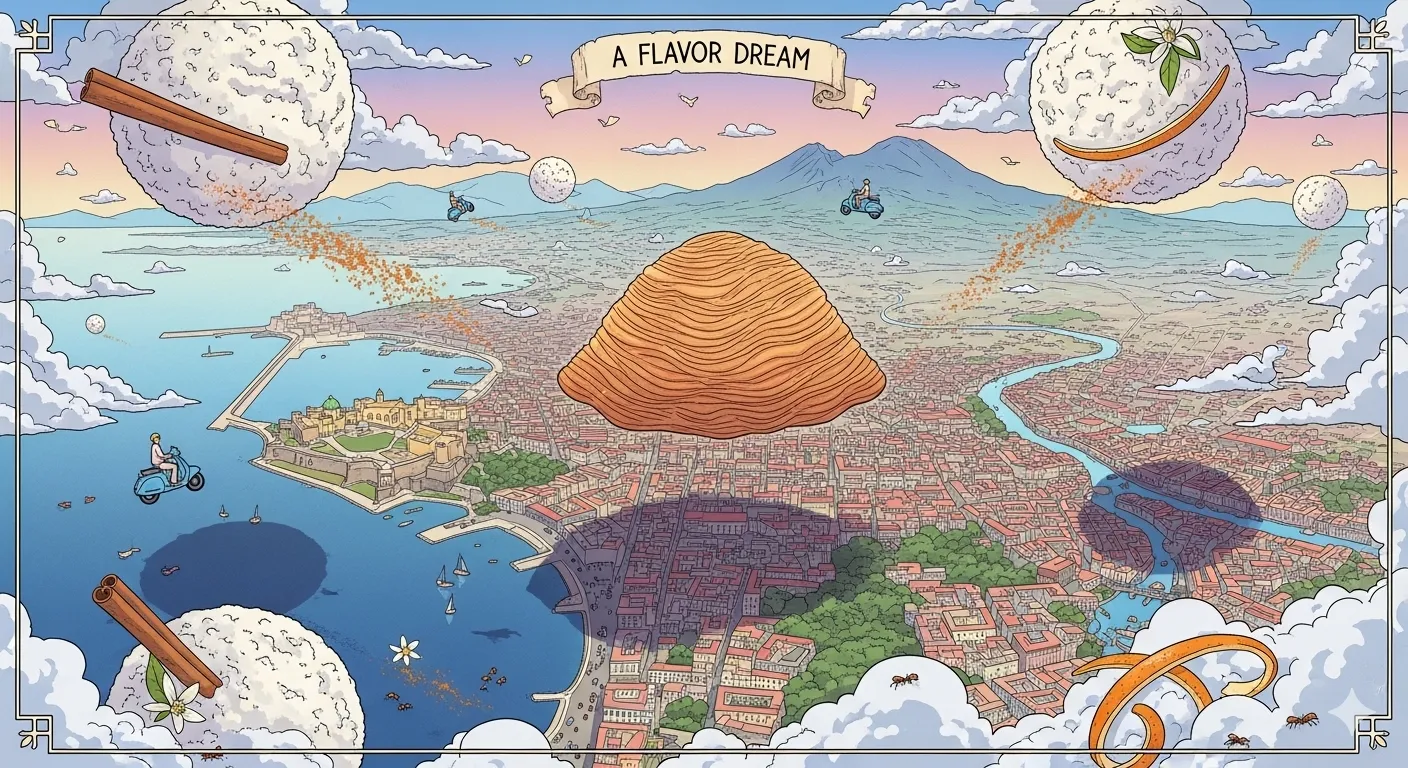
Sfogliatelle
Naples' pastry, now frozen
You've got four components to manage (candied apricots, reduction, semolina crumble, ricotta custard), and those candied apricots will sit around drying for 4+ hours while you contemplate your life choices. The ricotta MUST be whipped smooth or you'll have grainy ice cream. Nothing technically hard, just lots of waiting and component juggling. Multi-day commitment, boss.
Sfogliatelle is this iconic Neapolitan pastry with layers of crispy shell and creamy ricotta-semolina filling. This ice cream tries to capture that same vibe: creamy ricotta base, candied fruit (apricot instead of traditional citron), and toasted semolina for that characteristic gritty-crunchy texture.
Fair warning, chief: you’ll be whipping ricotta for a while, and the candied apricots take most of a damn day to dry. This is a multi-component situation, but none of the individual techniques are hard—you’re just orchestrating several things. Plan accordingly.
Ingredients
Light Custard Base:
- 2 cups heavy cream
- 1 cup whole milk
- 2/3 cup sugar
- 3-4 egg yolks
- 1 cup whole milk ricotta
- 1 tsp vanilla extract
- 1 tsp ground cinnamon
- Pinch of salt
Apricot Reduction:
- 1 cup dried apricots (chopped)
- 3/4 cup water
- 2-3 tbsp honey
- Squeeze of lemon juice
Candied Apricots:
- 1/2 cup dried apricots
- 1 cup water
- 3/4 cup sugar
- Squeeze of lemon juice
Buttery Semolina Crumble:
- 1/4 cup semolina flour
- 2 tbsp butter
- 2 tbsp sugar
- Tiny pinch cinnamon
- Pinch of salt
Instructions
Candied Apricots (make first, needs 4+ hours drying):
Cut the dried apricots into small pieces—raisin-sized. Blanch them for 1 minute in boiling water, drain, rinse. (This softens them up a bit.)
Combine 1 cup water, 3/4 cup sugar, and a squeeze of lemon in a saucepan. Bring to a simmer, add the apricots. Cook gently for 30-40 minutes until they’re translucent and glossy—they should look like little jewels.
Transfer to a rack set over parchment with a slotted spoon. Now here’s the tedious part: dry them for 4+ hours until they’re tacky but not wet. This will take forever. I’m sorry. But it’s worth it. Then toss in sugar and store airtight.
Apricot Reduction:
Combine 1 cup chopped dried apricots, 3/4 cup water, 2-3 tbsp honey, and a squeeze of lemon in a saucepan. Simmer for 30-45 minutes until everything’s broken down and thick and jammy.
Puree smooth in a blender. Cool completely, refrigerate.
Buttery Semolina Crumble:
Toast the semolina in a dry skillet over medium heat, stirring constantly for 3-4 minutes until it’s nutty and golden. Add the butter, stir until melted and coating every grain.
Add sugar, tiny pinch of cinnamon, and salt. Stir for 2-3 minutes as the sugar caramelizes and creates these little clusters. Spread on parchment to cool, then break into small pieces. Store airtight.
Make Light Custard:
Heat cream, milk, and half the sugar until steaming. Make your custard with egg yolks and the remaining sugar to 170-175°F—this is lighter than our usual rich custard, giving a more delicate texture that lets the ricotta shine. Don’t let it boil or you’ll have sweet scrambled eggs.
Stir in the cinnamon, vanilla, and salt. Strain. Fold in the cooled apricot reduction while it’s still warm. Cool over an ice bath.
Prepare Ricotta:
This is fucking important: Whip the whole milk ricotta in a food processor or with a hand mixer for 2-3 minutes until it’s completely smooth and creamy—should look like whipped cream cheese. No graininess should remain. If you skip this step, the ricotta will freeze grainy and you’ll be sad. Don’t skip it.
Combine:
Once the custard is completely cold—not warm, not room temp, COLD—fold in the whipped ricotta. Whisk until smooth and uniform. Should taste of ricotta creaminess, apricot, cinnamon, and vanilla all playing together.
Refrigerate at least 4 hours or overnight. The ricotta needs proper cold time to integrate with the custard base—don’t rush this or the texture will be off.
Churn:
Churn until soft-serve. The ricotta makes this denser than standard custard, so expect it to look thick and pale cream-colored when ready. In the last minute, add the candied apricot pieces and about 2/3 of the semolina crumble. Reserve some crumble for topping later if you want to get fancy.
Transfer to your container. For maximum textural interest, layer it: spread 1/3 of the ice cream, scatter some reserved crumble, repeat twice. Or just fold everything in and call it a day—both work. Freeze 4+ hours.
Notes
The ricotta:
Must be whipped smooth before folding into custard or it freezes grainy. This is non-negotiable, pal. Use whole milk ricotta, not part-skim. The fat content matters for texture. Part-skim will give you sad, icy results.
Light custard:
Using 3-4 yolks (I recommend 4) instead of 5-6 keeps this lighter, which lets the ricotta’s character shine through without everything being too heavy and dense.
Semolina:
This is authentic—semolina is in the original pastry filling AND provides that characteristic gritty-crunchy texture that makes sfogliatelle what it is. Semolina is durum wheat flour—the same stuff pasta is made from. In Southern Italian pastry-making, it’s prized because it holds up to moisture better than all-purpose flour while adding this subtle grittiness that’s fucking delicious. Must be toasted first because raw semolina is bland as hell. The butter and sugar create these little caramelized clusters that are absolutely perfect.
Apricot vs. citron:
Traditional sfogliatelle uses candied orange peel or citron—preserved citrus has been part of Italian pastry-making for centuries, originally as a way to use the whole fruit and extend shelf life. Citron (cedro in Italian) in particular is traditional in Neapolitan sfogliatelle. It’s this massive, knobby citrus fruit that’s mostly pith, and the candied peel has this intensely perfumed, floral-bitter character.
I chose apricot because: (1) citron is fucking impossible to find unless you’re in an Italian neighborhood or ordering online, (2) apricots have a similar candied texture and jewel-tone look when prepared this way, and (3) stone fruit feels more modern while still respecting the Italian sweet-tart-fruit tradition.
If you want to go fully traditional, candied orange peel is much easier to source and works beautifully—just blanch fresh orange peel three times to remove bitterness, then follow the same candying process with the sugar syrup. Some specialty Italian markets sell pre-candied citron if you’re feeling ambitious, but it’ll cost you.
Cultural context:
Sfogliatelle is Naples, full stop. The pastry originated in a 17th-century convent in the Amalfi Coast—Santa Rosa monastery—where nuns made a filled pastry with semolina, ricotta, and candied fruit. The recipe eventually migrated to Naples, where bakers developed the iconic shell-shaped, multi-layered version (sfogliatella riccia) that you find in every pasticceria in the city today. Neapolitans are fiercely protective of their sfogliatelle—there are bakeries that have been making them the same way for over a century, and arguments about whose is best can get genuinely heated. The filling—ricotta, semolina, candied fruit, warm spices—is the soul of the pastry, and that’s what this ice cream captures. The pastry shell itself doesn’t translate to frozen form (it’d get soggy in minutes), so the semolina crumble stands in for that crucial textural crunch.
Make-Ahead: The candied apricots can be made up to a week ahead and stored airtight. The semolina crumble keeps for 3-4 days in an airtight container. Make the custard base the night before churning for best results.
Allergen Information: Contains wheat/gluten (semolina crumble).
What it tastes like:
Creamy ricotta first—smooth, slightly tangy, unmistakably Italian. Warm cinnamon-vanilla spice underneath, familiar and comforting. Bright apricot sweetness cuts through in concentrated bursts—tart, fruity, almost jammy where the candied pieces have softened. Semolina crumble adds that crucial textural crunch and a toasty, wheaty note that makes your brain go “oh yeah, this is supposed to be a pastry.” The whole thing captures sfogliatelle’s essence—ricotta filling, warm spice, fruit, flaky crunch—without trying to literally recreate the pastry in frozen form. Naples in a bowl, dude.